From Bitter to Beautiful: A Chef's Guide to Cooking Garlic
If you have ever cooked with garlic, you have heard the warning: do not cook it too long or it will turn bitter.
It is one of those kitchen truisms that gets passed around like gospel.
But it is not quite true.
I have been cooking professionally for over 30 years. In all that time, no one has ever sent a plate back complaining about the garlic. Not once. Which tells me the bitterness warning has less to do with garlic itself and more to do with how we are treating it.
Garlic can go wrong. But time is rarely the reason.
This connects to something I write about more broadly in Clean Cooking: the difference between real shortcuts and lazy ones. Leaving the green sprout in garlic, skipping the stir, crowding the pan: these are lazy shortcuts. They feel like time saved. They cost you flavor. Everything in a kitchen has a purpose and timing, and garlic is one of the clearest places that shows up.
What Actually Makes Garlic Bitter
There are two things that cause garlic to taste bitter, and neither of them is how long it has been in the pan.
The first is high heat without movement. When you drop chopped or minced garlic into hot oil and leave it there, it burns in seconds. Burned garlic is bitter garlic. The culprit is not duration. It is temperature plus stillness. You can cook garlic at high heat. You just have to keep it moving. A constant stir protects the pieces from the pan's hottest spots and lets them develop color without scorching.
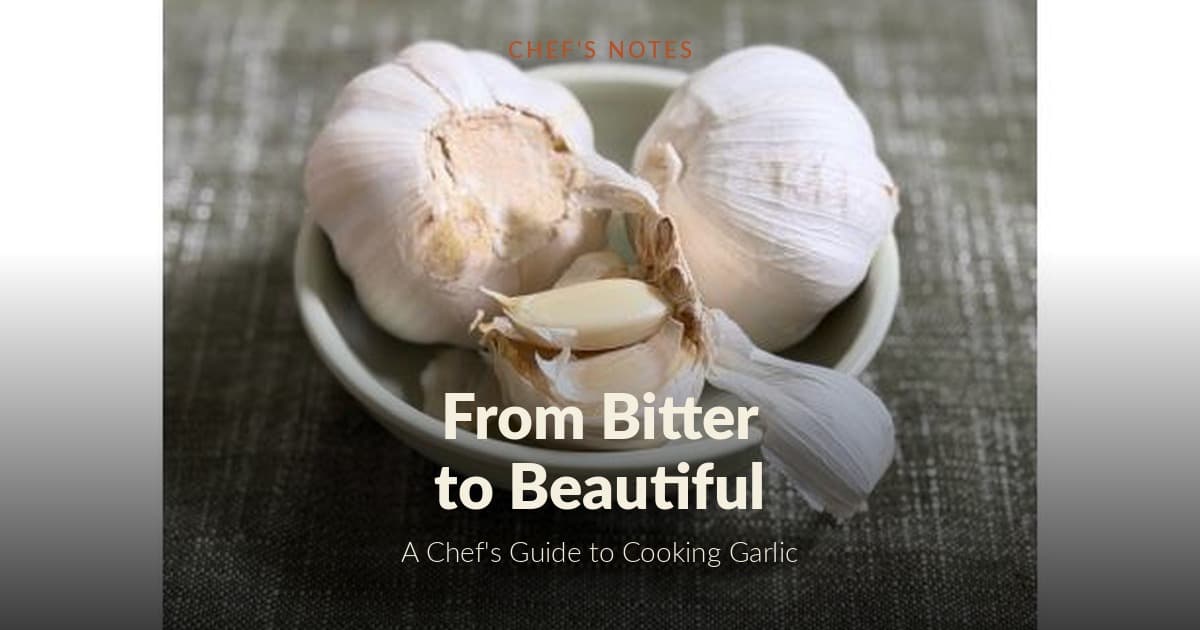
The second is the green sprout. As a clove ages, a green germ grows inside it. That sprout carries a sharper, more aggressive flavor, especially noticeable in raw preparations or anything lightly cooked. Removing it takes five seconds. In the right dish, that five seconds matters.
That is it. Two things.
What Happens When You Keep It Moving
When you stir garlic in hot oil, you are constantly pulling it away from the pan surface before it has a chance to burn. This is how wok cooking works. Garlic hits screaming-hot oil, moves constantly, and comes out aromatic, golden, and complex rather than scorched. The Maillard reaction has time to build flavor. The garlic does not have time to char. If you want to understand exactly what the Maillard reaction is and why it matters, I wrote a full post on it: Why Brown Tastes Better.
You can hear it when it is going right. A steady, confident sizzle. The kind of sound where the pan is working but not panicking. What you are listening for is consistency. When the sizzle gets sharper or you start to smell something closer to smoke than aroma, the pan is telling you something.
Keep it moving. Lower the heat if you need to. The garlic will tell you.
What Happens When You Slow Down
When garlic is cooked gently, roasted whole, sauteed over low heat, or confited slowly in oil, something remarkable happens.
The sharp, raw bite disappears. The heat breaks down the compounds that make raw garlic aggressive and brings out a different set of flavors entirely. Sweet. Nutty. Almost caramelized. You can smell the shift as it happens. What starts out pungent and sharp becomes something warmer, rounder, more savory.
A whole head of garlic, roasted at 375 degrees for 45 minutes, comes out so soft you can spread it. The cloves are golden at the edges, soft in the center, and sweet enough that you could eat them on their own. There is nothing bitter about them. There is also nothing delicate about the flavor. It is deep and layered and concentrated.
This is the transformation the title is about. Not a trick. Just time and low heat.
The Green Sprout: When It Matters
In a long-simmered sauce, a braise, or a pan of roasted vegetables, the green sprout mostly disappears into the cooking environment.
But in anything where garlic is the lead, pesto, aioli, garlic butter, a simple confit, a raw vinaigrette, that sprout leaves a harsh edge that does not belong. You taste it as bitterness, but it is more accurate to call it sharpness without depth.
The fix is simple. Split the clove lengthwise and pull out the green center. Five seconds. In the dishes where it matters, the difference is real and immediate.
What You Experience on the Plate
There is a version of garlic for every moment in a meal.
Raw, it is sharp and forward. A little goes a long way, but that heat and bite is exactly what a vinaigrette or chimichurri needs.
Briefly sauteed, it is aromatic and savory. It opens up in the oil and spreads into everything around it. This is the garlic you smell from the other room.
Roasted whole, it is sweet and spreadable. Rich without sharpness. The kind of thing that makes a simple piece of bread feel like something.
Confited slowly in olive oil, it becomes almost silky. Mild, deeply savory, and gentle enough to eat whole. The oil it cooked in carries that same flavor and becomes one of the most useful things in your kitchen.
Each version is doing a different job. Knowing which one you want tells you how to treat it.
Chef Tip
Taste your garlic before you decide how to cook it. A young, firm clove without a sprout has a cleaner, brighter flavor. An older clove is more pungent and benefits from slow cooking or having the sprout removed. The clove is already telling you something before it hits the pan.
When sauteing at high heat, watch the color and trust your nose before you trust the clock. Golden is where you want it. Just past golden you start losing the window. The fragrance shifts from sweet and savory to something drier and sharper. That is your signal.
Where This Connects to the Protein Flip™
Garlic is foundational to the Protein Flip™ approach.
When you reduce the amount of animal protein on a plate and build more of the meal around legumes, grains, and vegetables, flavor has to carry more of the weight. Garlic is one of the ingredients doing that work. It builds the base. It gives the dish its direction before anything else arrives.
Getting garlic right, knowing when to rush it, when to slow it down, when the sprout matters and when it does not, is part of how a plant-forward plate still tastes complete and satisfying.
Try This at Home
Slow roast. Cut the top off a whole head of garlic, drizzle with olive oil and a pinch of salt, wrap in foil, and roast at 375 degrees for 45 minutes. Squeeze the cloves out and spread them on bread. Taste what garlic can be when you give it time.
Sweet sauté. Slice four cloves thin and cook them gently in olive oil over low heat for 10 to 15 minutes. Do not rush it. Watch the color move from white to pale gold to golden. Taste one at the end. Use them and the oil on pasta, bread, or grilled vegetables.
Stir-fry blast. Mince two cloves and toss them into very hot oil with constant movement for 30 to 60 seconds. Notice how fast the fragrance opens up and how quickly you have to move.
Sprout comparison. The next time you have two older cloves of garlic, make a simple preparation twice, once with the green sprout left in and once without. The difference is clearest in something raw or lightly cooked.
Garlic does not have to be something you manage or fear. It is one of the most forgiving ingredients in a kitchen once you understand what it is actually asking from you.
Balanced Protein. Better Living. Healthier Planet.
Keep reading