Black Garlic: Why I'm Always Looking for the Next Ingredient
One of my favorite parts of cooking is not mastering the ingredients I already know.
It is discovering the ones I do not.
As a chef, it is easy to fall into the habit of reaching for the same herbs, vegetables, spices, and pantry staples because they are familiar and reliable. But some of the best cooking happens when curiosity takes over. When you pick up something unfamiliar, bring it home, and figure out what it wants to do.
That is exactly what happened with black garlic.
I had heard chefs talk about it for years. I had seen it on menus. I knew it had a following. But until recently I had never actually cooked with it. So I bought some. Not because I already knew how to use it. Because I wanted to learn.
What Is Black Garlic?
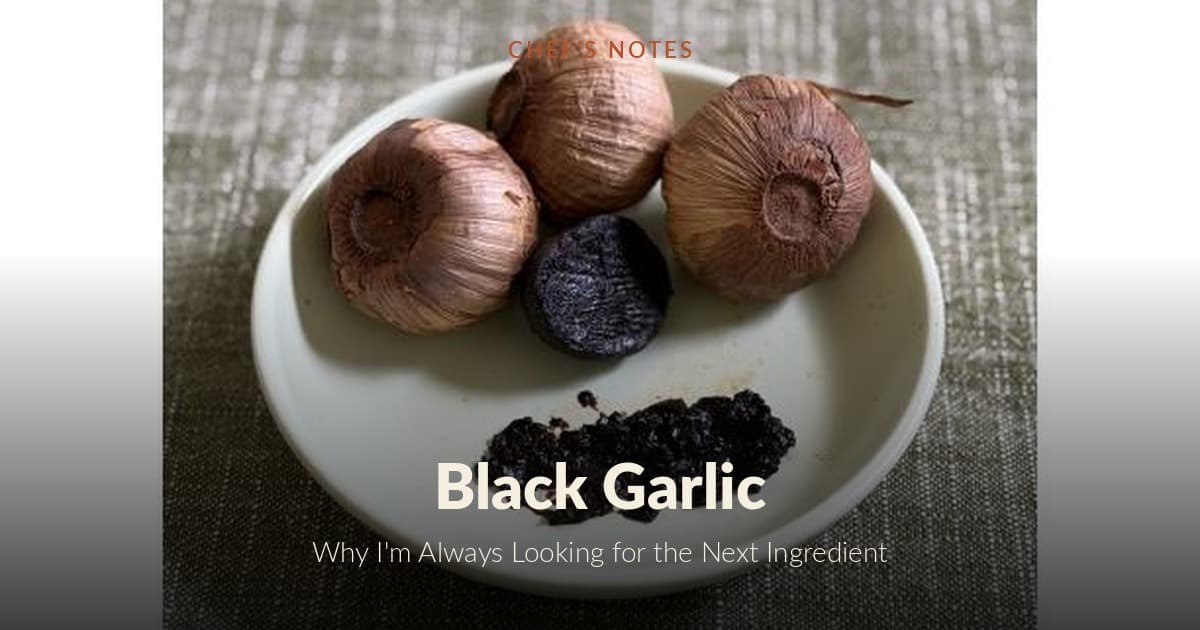
Despite the name, black garlic is not a different variety of garlic.
It is ordinary garlic, slowly aged for several weeks under carefully controlled heat and humidity. During that process, something called the Maillard reaction gradually transforms the cloves (I go deep on how that works in Why Brown Tastes Better). The sharp, pungent bite disappears. The cloves become soft, dark, and almost spreadable. The flavor changes completely.
Instead of the forward heat we associate with fresh garlic, black garlic develops something layered and complex. Balsamic vinegar. Molasses. Tamarind. Dried fruit. Roasted depth with a savory sweetness underneath. It is one of those ingredients that is hard to fully understand until you taste it.
If you want to understand how fresh garlic works before you get to this, I wrote about it in From Bitter to Beautiful: A Chef's Guide to Cooking Garlic. The two posts read well together.
My First Impression
I will be honest. When I opened the package, I thought I knew what it was going to taste like.
I expected roasted garlic.
Instead I got something completely different.
Sweet. Earthy. Rich. Almost jam-like. Not sharp. Not pungent. Just a long, mellow, layered flavor that sat on the palate and kept giving.
My chef's brain immediately started moving. Vinaigrette. Roasted vegetables. Seafood. Beans. A finishing element on a grain bowl. The ideas came fast because the flavor is so cooperative. It does not announce itself the way raw garlic does. It works alongside everything else and makes the whole dish taste more complete.
What Makes It Worth Having
Black garlic has gained attention for more than its flavor. The aging process increases certain antioxidants, particularly a compound called S-allyl cysteine, which is more readily absorbed than many of the compounds found in fresh garlic. Research continues into its potential role in supporting heart health and reducing oxidative stress.
I think those findings are worth knowing, but they are not the main reason it earns a place in my kitchen. The main reason is what it does to food. It delivers genuine depth and umami without butter, cream, sugar, or heavy sauces. A small amount transforms a simple dish into something that tastes far more developed than it has any right to be.
That is the kind of ingredient I am always looking for.
On the practical side: unopened black garlic stores well in the pantry for a long time. Once opened, keep it in the refrigerator where it stays fresh for weeks. Unlike fresh garlic, which eventually sprouts or dries out, black garlic is patient. You can keep it on hand and reach for it when the moment is right.
How I Use It
Black garlic is soft enough to mash with the side of a knife, which makes it easy to work into almost anything. Here are the ways I use it most.
Vinaigrette. Mash one or two cloves into a paste and whisk them with olive oil, lemon juice, and a pinch of salt. The garlic dissolves into the dressing without any sharpness. What you get is savory depth in something that looks like a simple vinaigrette. It changes the whole character of a salad or a grain bowl.
Spread. On good bread, a few cloves smashed and spread is something close to a condiment on its own. Richer than butter, more complex than roasted garlic, and completely plant-based. It also works as a base for a sauce or a dip.
Finishing beans or lentils. Stir one or two mashed cloves into a finished pot of white beans, chickpeas, or lentils. The clove melts in with the warmth and adds a savory, slightly sweet depth that makes the dish taste like it cooked for twice as long. No extra fat required.
Pan sauce or marinade. Mash a clove into a pan sauce after deglazing, or blend one into a marinade for chicken or seafood. It rounds out the acidity and adds body without changing the color dramatically.
What You Experience on the Plate
Fresh garlic announces itself. You smell it before you see the dish. It leads.
Black garlic supports. It is the thing underneath that makes everything around it taste more complete. In a vinaigrette you taste the brightness of lemon and the richness of oil, and there is something else underneath that you cannot quite name but would miss if it were gone. In a bowl of beans it is the same. The savory depth that makes a simple ingredient feel finished.
That is the role it plays. Not the loudest thing on the plate. The thing that makes the loudest things taste better.
Where This Connects to the Protein Flip™
The Protein Flip™ approach is about building satisfying meals with plants doing more of the work. Legumes, grains, and vegetables carrying flavor and substance without relying on large portions of animal protein.
For that to work, flavor has to be built with intention. Black garlic is one of the ingredients that helps close the gap. A clove stirred into beans or lentils, mashed into a dressing, or worked into a grain bowl adds the kind of deep, savory complexity that makes a plant-forward plate feel complete rather than careful.
It is not a shortcut. It is a tool. And it is one that earns its place in a Protein Flip™ kitchen.
Chef Tip
Start with one clove. Black garlic is concentrated and a little goes a long way, especially in raw applications like dressings. Taste as you go. Once you understand where its flavor lands, you will find the right amount for each dish.
If you want to try the same style I have been cooking with, you can find it here: Black Garlic (affiliate link: if you buy through it, I earn a small commission at no extra cost to you. It is part of how I keep sharing recipes and content for free. Thank you for the support.)
Where to Find It
Black garlic has become far more accessible in recent years. Specialty grocery stores, Whole Foods, gourmet markets, and Asian grocery stores often carry it. It is also widely available online. If you have never seen it before, check the condiment or specialty ingredient aisle first.
It is worth finding. One package will last you a long time and teach you more about flavor than almost anything else you could buy for the same price.
I have a feeling this will not be the last time you see black garlic in my kitchen.
Balanced Protein. Better Living. Healthier Planet.
Keep reading