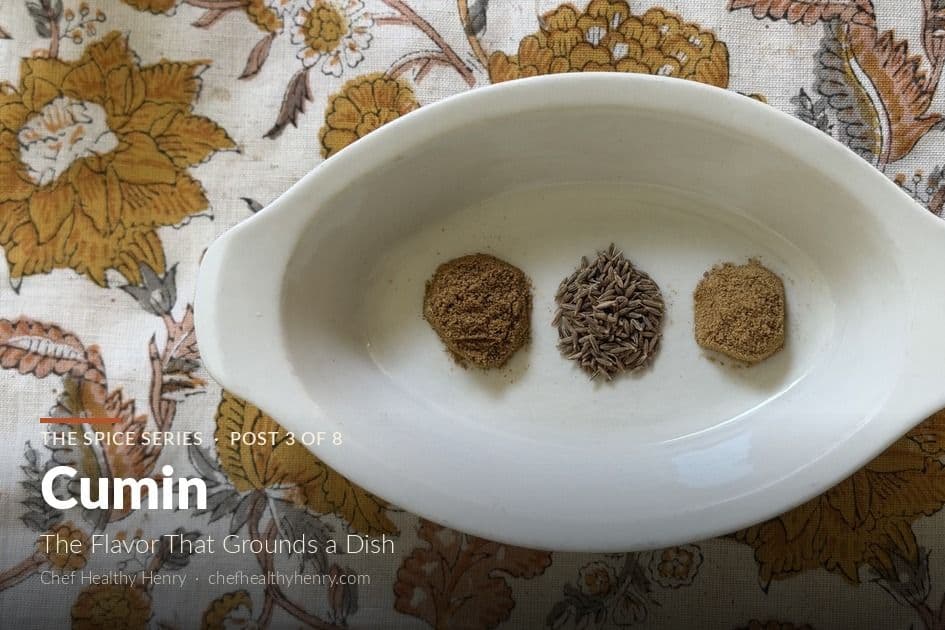
Cumin: The Flavor That Grounds a Dish
Spice Series, post 3 of 8
Cumin is one of those spices you recognize instantly, even if you cannot quite describe it.
It's warm. Earthy. Slightly smoky. The kind of flavor that makes a dish feel deeper, fuller, and more complete.
But what makes cumin so interesting is not just what it tastes like. It's how differently that flavor shows up depending on where it's being cooked.
From North African stews to Indian curries to Mexican beans and chile-based dishes, cumin moves across cultures in a way very few spices do. And yet it never tastes exactly the same twice.
One Spice, Many Expressions
The difference is not just about geography. It's about technique, pairing, and intention.
North Africa and the Middle East
Here, cumin is rarely the lead.
It works alongside coriander, cinnamon, turmeric, and other spices to build slow, layered warmth. You find it in tagines, harira, lentil soups, and spice blends like ras el hanout, where the goal is complexity that unfolds over time rather than a single flavor you can identify in the first bite.
You may not taste the cumin directly. You feel the warmth it helps create.
India
In Indian cooking, cumin can be something you experience in two completely different ways depending on how it is used.
Whole cumin seeds toasted or bloomed in hot oil or ghee at the start of cooking release their aromatic oils almost immediately. The smell changes in seconds. And because the seeds stay whole, they show up as small, concentrated bursts of warm, nutty flavor as you eat.
Ground cumin works differently. It disappears into a spice mixture, adding consistent earthiness and warmth throughout. No seed to bite into, no single cumin moment. Just a steady presence underneath everything else.
Same spice. Different technique. Different experience.
Mexico and Latin America
Ground cumin tends to take a more integrated role here.
It is folded into beans, meats, marinades, stews, and chile-based dishes where its earthiness becomes part of the base rather than something you encounter on its own. When paired with Mexican oregano, coriander, garlic, and dried chiles, cumin helps build a flavor profile that is completely distinct from the one it helps create in an Indian kitchen.
The cumin is the same. The company it keeps changes everything.
What You Experience on the Plate
This is where cumin really demonstrates what this series is about.
Imagine the same spice used three different ways.
In an Indian dish made with whole toasted cumin seeds, you may smell the spice before the food even reaches you. Then as you eat, you encounter seeds that release small bursts of warm, nutty aroma. The cumin has a presence you can find.
In a North African dish, cumin is harder to isolate. It works among other aromatic spices, building warmth in layers. You notice the depth more than the individual flavors that created it.
In a Mexican dish made with ground cumin, the spice almost disappears physically. There is no seed to bite into and no single moment where cumin announces itself. Instead, there is a steady earthy warmth running underneath chiles, beans, tomato, and meat.
Three kitchens. One spice. Three completely different experiences.
That is why saying “this dish has cumin” does not tell you nearly enough. How it is used matters just as much as the spice itself.
Chef Tip: Whole vs Ground
Whole cumin seeds bring aroma and texture. Ground cumin builds steady, even depth.
Whole seeds hold onto their essential oils until heat releases them. Even 30 seconds in a dry pan or a moment in hot oil completely transforms their character. The smell is the signal. When you get that warm, slightly smoky aroma rising from the pan, they are ready. Watch closely at that point because the line between toasted and burnt is narrow, and burnt cumin is bitter and hard to recover from.
Ground cumin has already released most of those oils. The flavor is more immediate, more uniform, and easier to blend evenly through a sauce or marinade. It does not need the extra step, and often you do not want it to.
Quick conversion: 1 teaspoon whole cumin seeds = approximately 3/4 teaspoon ground cumin
Use whole seeds when you want layered aroma and occasional texture. Use ground when you want consistency and a clean blend.
How to Use It With Intention
Cumin is not just a background spice. It is a structural one.
Use whole seeds when building Indian-inspired dishes. Toast them briefly in a dry pan until fragrant, or bloom them in oil or ghee at the start of cooking before adding aromatics. That step elevates the dish before anything else has even gone in.
Use ground cumin in sauces, stews, bean dishes, and spice rubs where you want the flavor distributed evenly throughout. In Mexican and Latin American cooking especially, ground cumin works best when it has time to cook into the dish rather than being added at the end.
In North African and Middle Eastern cooking, think of cumin as one voice in a larger spice conversation. It should not lead on its own. Let it work with coriander, warm spices, and aromatics to build something more layered.
A small amount rounds out a dish. A little more defines it. That is the balance worth finding.
This also connects to how the Protein Flip approach works. Whether you are building a lentil stew, a bean-forward taco filling, or a grain bowl, the right cumin technique is what keeps the dish grounded and cohesive when you add or extend it. The flavor foundation stays intact. What you build on top of it can change.
Bringing It Into Your Kitchen
Cumin teaches an important lesson.
Authenticity is not always about using a different ingredient. Sometimes it is about treating the same ingredient differently. Whole or ground. Toasted or blended in. The lead or part of the background.
Those choices change the aroma, the texture, the flavor, and ultimately the cultural experience of the dish.
Once you start making those choices consciously, you stop relying on a recipe to tell you how much cumin to use. You start to understand what it is doing and why.
Next up, we shift into basil and look at how something light and aromatic can completely change the direction of a dish depending on how it is handled.
Balanced Protein. Better Living. Healthier Planet.
Keep reading