Basil: The Herb That Brings a Dish to Life
Spice Series, post 4 of 8
Basil is one of the most recognizable herbs in the kitchen.
Fresh, green, and aromatic, it is often associated with Italian cooking. Tomato sauce, caprese salad, pesto. Simple, familiar, comforting.
But basil does not belong to just one cuisine.
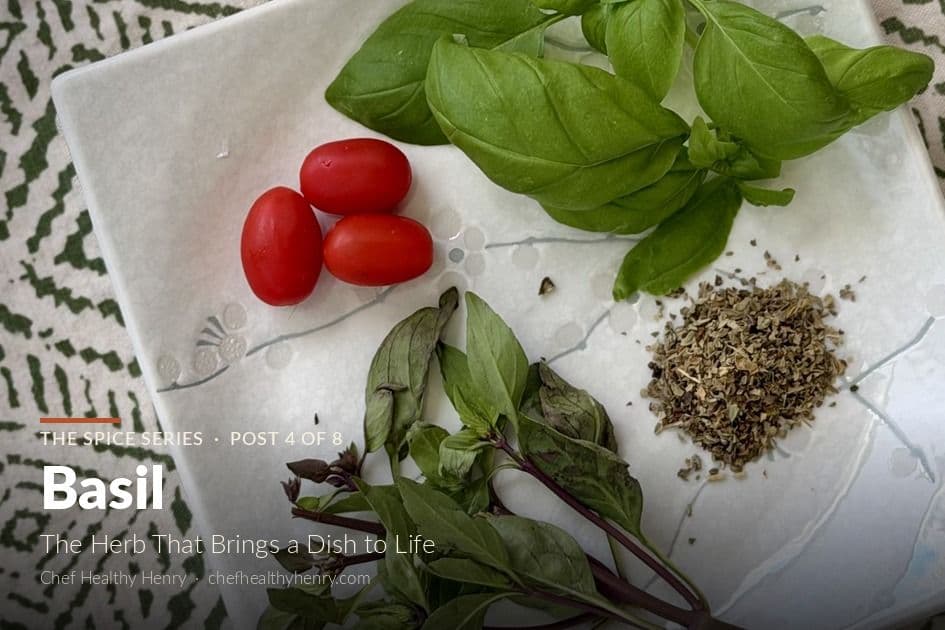
And unlike some of the dried spices we have explored in this series, with basil you can often see and feel the differences before you even taste them.
One Herb, Different Expressions
Italian Sweet Basil
This is the basil most people recognize.
The leaves are soft and tender, and the aroma is sweet and distinctly herbal with a gentle peppery quality. That tenderness is part of the experience. Tear fresh sweet basil over tomatoes and mozzarella and it becomes almost silky as it meets olive oil and moisture. Blend it into pesto and those delicate leaves become part of a creamy, aromatic sauce.
This basil complements rather than dominates. It works best when it does not have to compete.
Thai Basil
Thai basil is a completely different experience.
The leaves are sturdier, and the flavor is more assertive, with noticeable anise or licorice-like notes. That physical difference matters as much as the flavor difference. Italian sweet basil wilts quickly under sustained heat. Thai basil holds up, which is why it can be added to hot stir-fries, curries, and brothy soups and still retain its character.
You are not simply substituting one basil for another. You are changing both the flavor and the way the herb behaves in the dish.
Holy Basil
Holy basil brings yet another personality.
More peppery and spicy in character, it is distinct from both Italian sweet basil and Thai basil. In Thai cooking especially, holy basil is the variety that traditionally goes into dishes like pad krapow, where its sharper, more aromatic edge is part of what defines the finished dish. Substituting sweet basil or Thai basil changes the experience in a way that is easy to notice once you know what you are looking for.
This is an important reminder that “basil” on an ingredient list does not always tell the whole story.
Lemon and Purple Basil
Other varieties push basil in still more directions.
Lemon basil introduces a distinct citrus quality that works beautifully as a finishing herb over seafood or grain dishes. Purple basil carries a somewhat different aromatic character alongside its dramatic color, making it a striking choice for salads or dishes where you want both flavor and visual contrast.
You may not use these every day. But knowing they exist changes how you think about basil as a category rather than a single ingredient.
What You Experience on the Plate
Imagine taking the same combination of chicken, vegetables, and rice and changing only the basil.
Finish it with Italian sweet basil and the experience becomes softer, sweeter, and more familiar. The basil wilts gently into the warm food, bringing a fresh herbal aroma that ties the plate together without pulling it in any particular direction.
Use Thai basil and the dish immediately becomes more assertive. That anise-like aroma moves the flavor into something more distinctly Southeast Asian, and the sturdier leaves maintain a real presence in each bite.
Use holy basil and the character changes again, becoming more peppery and sharp. The dish feels less like a comfort meal and more like something with heat and intention behind it.
The chicken, vegetables, and rice have not changed. The basil tells you what kind of food you are eating.
Chef Tip: Fresh vs Dried (This One Matters)
If there is one herb where the difference between fresh and dried really shows, it is basil.
Fresh basil delivers aroma, tenderness, color, and a kind of brightness that changes the moment it hits the plate. That character is fragile, which is why fresh basil almost always goes on at the very end, after the heat is off or just as the dish is being plated.
Dried basil provides a background herbal note, but it cannot recreate those sensory qualities. The aroma is muted, the color is gone, and the brightness disappears entirely.
Quick conversion: 1 tablespoon fresh basil = approximately 1 teaspoon dried
Treat that as a measurement guide, not an experience guide. If fresh basil is central to what makes the dish what it is, dried basil will not get you there. This is one of the few cases where the substitution genuinely changes the result.
One technique worth knowing: tear basil rather than cutting it whenever possible. A knife bruises the leaves and causes them to darken quickly. Tearing keeps the edges cleaner and the color brighter, especially in dishes where the basil is visible.
How to Use It With Intention
Use Italian sweet basil when you want tender texture and fresh, sweet herbal flavor. Add it at the very end of cooking or use it entirely raw, torn over the finished dish. It is too delicate for sustained heat.
Use Thai basil when you want a stronger anise-forward flavor and an herb that can hold up in a hot pan. It can go in earlier than sweet basil without losing its character, making it the right choice for stir-fries, curries, and soups.
Use holy basil when the dish traditionally calls for it. If you are cooking pad krapow or another dish where holy basil is the traditional choice, that detail matters. The peppery sharpness is part of what the dish is supposed to taste like.
Choose the basil based on the cuisine you are cooking. When you are building a Protein Flip plate around grilled chicken, lentils, or roasted vegetables, the variety you finish with can shift the entire feel of the dish. Italian sweet basil keeps it familiar and Mediterranean. Thai basil moves it toward Southeast Asian. That choice is yours to make deliberately.
Bringing It Into Your Kitchen
Basil makes the idea of regional authenticity especially easy to see.
The varieties look different. They smell different. They taste different. They behave differently when exposed to heat.
So when a traditional dish calls for a particular variety of basil, that detail is not a suggestion. It is part of the sensory identity of the dish.
Not about being precise for the sake of it. About preserving the experience that makes the dish worth cooking.
Next up, we move into paprika and look at how geography and production can transform dried peppers into spices that range from sweet and refined to deep, smoky, and bold.
Balanced Protein. Better Living. Healthier Planet.
Keep reading