Cinnamon: Familiar Flavor, Unexpected Role
Spice Series, post 6 of 8
Cinnamon is one of the most recognizable spices in the kitchen.
Warm, fragrant, and comforting, it is often tied to desserts and baked goods. It shows up in oatmeal, pastries, and anything that leans toward that familiar cozy flavor.
But that is only part of the story.
Around the world, cinnamon plays very different roles. Sometimes it is sweet. Sometimes it is savory. Sometimes it is meant to stand out. And sometimes you should not immediately recognize it at all.
One Spice, Two Very Different Types
Ceylon Cinnamon
Often called “true cinnamon,” Ceylon cinnamon is lighter and more delicate than cassia.
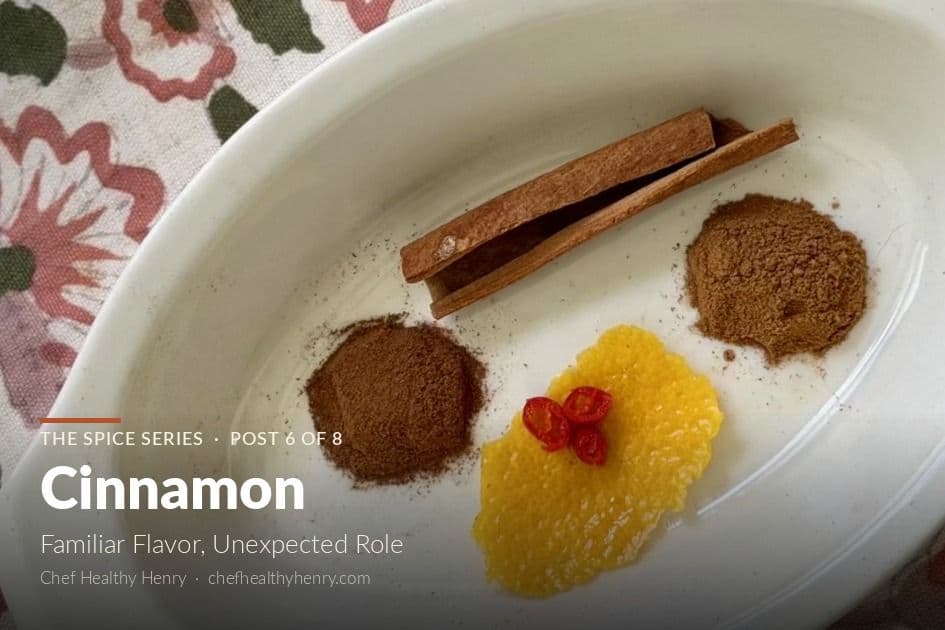
Its flavor is subtle, layered, and slightly citrusy. Ceylon cinnamon sticks are generally made up of multiple thin, papery layers rolled together rather than one thick, hard piece of bark. That physical delicacy carries through into how it flavors food. It infuses more gently, blends more easily into complex preparations, and rarely dominates what surrounds it.
Cassia Cinnamon
Cassia is what most people in the United States recognize as cinnamon.
It is bolder, stronger, and more direct. The sticks tend to be thicker and harder, and the flavor delivers a more immediate punch. That intensity works beautifully in dishes where cinnamon is supposed to stand forward, particularly familiar baked goods, coffee drinks, and sweets where the cinnamon is part of what you are tasting first.
A Note on Mexican Cinnamon
When people refer to Mexican cinnamon, or canela, they are generally talking about Ceylon cinnamon.
This one is personal for me.
I remember growing up and putting cinnamon in my Mexican hot chocolate, using a cinnamon stick as the stirrer. As I stirred, the cinnamon slowly infused the hot chocolate. You smelled it as you brought the cup toward you. You tasted that gentle warmth alongside the chocolate. Even holding the cinnamon stick and stirring it was part of the experience.
It was not just an ingredient. It was part of the ritual.
That softer quality is also what allows Mexican cinnamon to move between sweet and savory cooking. You find it in drinks, desserts, arroz con leche, and complex preparations like mole, where it quietly supports chiles and other spices without making the dish taste like dessert. That is the difference context makes.
Cinnamon Across Cultures
Mexico
Cinnamon can be warm and comforting without being aggressive.
In Mexican hot chocolate, café de olla, and slow-cooked savory sauces, its fragrance is as important as its taste. It is rarely the flavor you are supposed to identify. It is the warmth underneath everything else.
Middle Eastern and North African Cooking
Cinnamon moves comfortably into savory food here.
Combined with cumin, coriander, and other spices in dishes like Moroccan tagine or Lebanese rice with meat, it contributes aromatic warmth that rounds the other flavors without sweetening them. The goal is not for you to say “I taste cinnamon.” The cinnamon is doing its work in the background, contributing to the overall aromatic character of the dish.
Indian Cooking
Whole cinnamon is often bloomed in oil or ghee at the beginning of cooking alongside cardamom, cloves, and bay leaves.
That step perfumes the cooking fat, which then carries that aroma throughout the food. It is a completely different experience from adding ground cinnamon at the end of a recipe. The cinnamon becomes part of the foundation, not a finishing note.
Western Cooking
Here, cinnamon moves forward.
In pastries, oatmeal, and desserts, especially when paired with sugar, its identity is familiar and obvious. This is cinnamon as the feature rather than the support.
Same spice. Completely different job.
What You Experience on the Plate
Think about cinnamon in three forms.
A cinnamon stick slowly infusing Mexican hot chocolate creates gentle aroma and warmth that builds as you drink. The cinnamon is present but never loud. It whispers.
A piece of cinnamon bloomed in ghee at the start of an Indian dish perfumes the cooking fat and becomes part of a larger aromatic foundation you may not be able to separate from everything else on the plate. It supports.
Ground cassia mixed with sugar and baked into a pastry delivers an immediate, recognizable cinnamon flavor that announces itself from the moment you smell the oven. It announces.
One whispers. One supports. One announces.
Understanding that difference is what lets you use cinnamon intentionally.
Whole vs Ground: A Different Kind of Control
Whole cinnamon releases flavor gradually. It is ideal for simmering in braises, stews, broths, and drinks where you want warmth to develop slowly over time. You pull the stick out before serving and the flavor it left behind stays.
Ground cinnamon disperses quickly and delivers more immediate, even impact. It is the right choice for baked goods, spice blends, and dishes where you want the flavor distributed throughout rather than infused.
There is no universal conversion that perfectly recreates one with the other because the extraction and the eating experience are different. Use whole cinnamon when you want infusion. Use ground cinnamon when you want distribution.
Chef Tip: Start Light, Build as Needed
Cinnamon is powerful, especially in savory dishes.
A small amount adds warmth and rounds other flavors without calling attention to itself. Too much and it can pull the entire dish in a direction you did not intend, making a stew taste like dessert or a spice blend taste unbalanced.
Start with less than you think you need, especially the first time you use it in a savory context. You can always build more warmth. Once cinnamon dominates, it is hard to dial back.
When used well in a savory dish, sometimes the best outcome is that nobody at the table can identify the cinnamon. They just know the food tastes complete.
How to Use It With Intention
Use Ceylon or Mexican cinnamon when you want a gentle, delicate infusion. It is the right choice for drinks, desserts, and savory dishes where cinnamon is one supporting voice among many. Its softness allows it to blend without dominating.
Use cassia when you want cinnamon to be the recognizable feature. Baked goods, oatmeal, and familiar sweet preparations benefit from its directness and strength.
Use whole sticks when cooking a braise, stew, broth, or drink where the cinnamon has time to infuse slowly. Remove the stick before serving. Use ground cinnamon when you want even distribution through a sauce, spice blend, or baked item.
This connects directly to the Protein Flip approach. A lentil and vegetable stew extended with whole grains, or a slow-cooked bean dish with braised chicken, can take on real depth when a small piece of cinnamon is bloomed into the fat at the start. It does not make the dish sweet. It makes it taste layered and considered. The cinnamon is invisible in the finished plate and essential to why it works.
Bringing It Into Your Kitchen
Cinnamon challenges the way we categorize ingredients.
Sweet spice. Savory spice. Mexican spice. Indian spice. It is all of those things. What changes is the variety, the technique, the surrounding ingredients, and the role it is being asked to play.
And that is exactly why choosing and using spices with cultural context matters.
Next up, we finish our individual spice explorations with chili peppers and powders, where differences in flavor, texture, color, and heat become impossible to ignore.
Balanced Protein. Better Living. Healthier Planet.
Keep reading