Why Is My Meat Tough Even After Cooking for Hours?
Tough meat after a long braise or slow cook is a common problem with a specific cause. The tenderizing process in braised meat depends on collagen (a connective tissue protein) converting into gelatin over time. That conversion only happens within a specific temperature range and requires enough time to complete.
The temperature was too high
Collagen converts to gelatin between 160 and 180 degrees Fahrenheit, slowly, over time. If the braise is boiling hard rather than simmering gently, the muscle fibers tighten and squeeze out moisture before the collagen has time to break down. The result is dry, stringy, tough meat even after hours. A gentle simmer (small bubbles, not a rolling boil) is essential.
It needs more time
If the meat is tough and still has some give, keep cooking it. Collagen-rich cuts like lamb shoulder, pork shoulder, beef chuck, and short ribs need 2.5 to 4 hours at a low simmer to fully tenderize. A check at two hours that finds tough meat is not a failure. It is just not done yet.
Wrong cut for the method
Braising only tenderizes cuts that are high in collagen. Lean cuts like chicken breast, pork loin, and beef tenderloin will not get more tender with long cooking. They get drier and tougher. These cuts are meant for high-heat, short-time methods: searing, grilling, roasting. Save the braising for the tough, collagen-rich cuts.
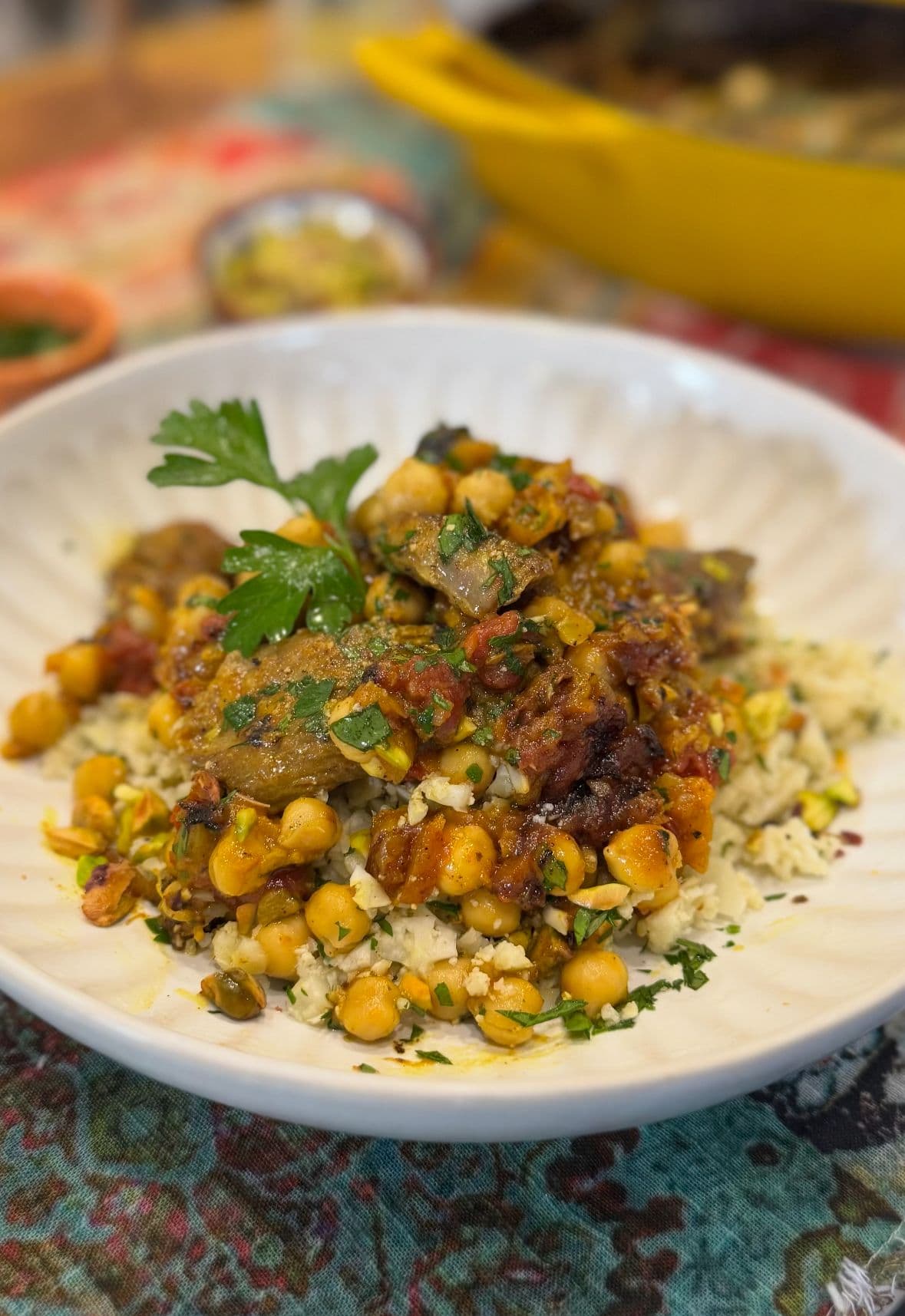
The Moroccan Lamb Stew and the Cozy Chicken and Barley Stew both use the right cuts for the right method.
Have a question about braising while you cook? Sous can help. Available in the Kitchen membership at chefhealthyhenry.com.
Balanced Protein. Better Living. Healthier Planet.
Keep reading