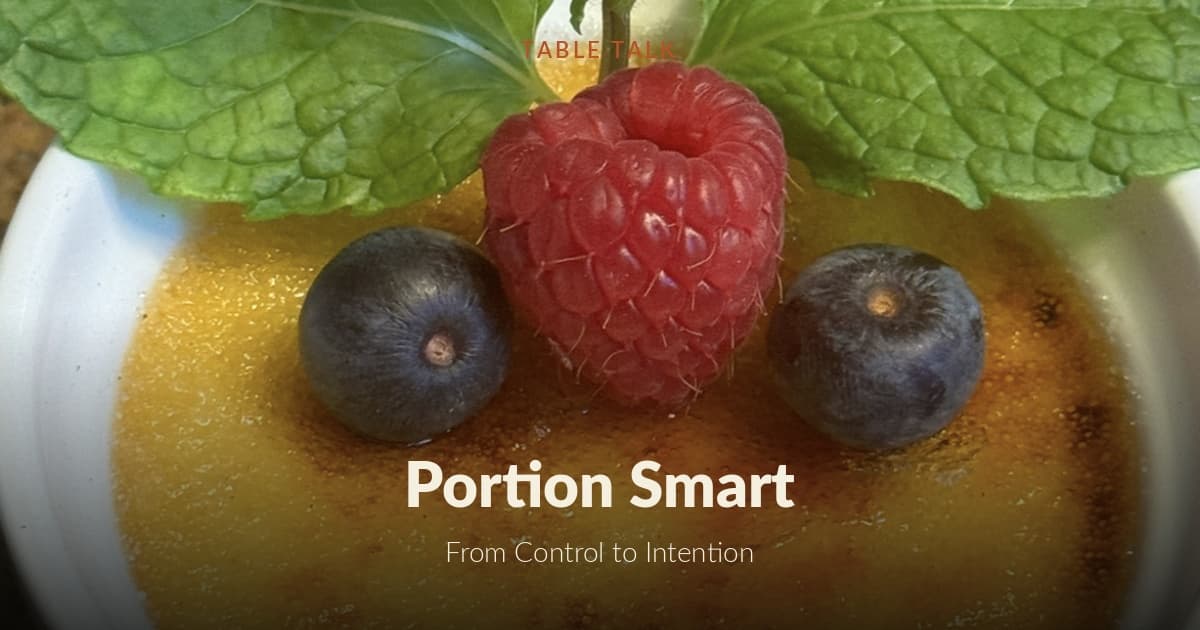
From Portion Control to Portion Smart
For years, I used the phrase portion control without thinking twice about it. It's what chefs say. It's what doctors say. It's what nearly every nutrition plan eventually circles back to. Control your portions. Cut back. Eat less. On the surface, it sounds responsible and disciplined. It sounds like maturity.
But over time, something about that word began to sit differently with me. Control implies tension. It suggests that food is something to manage, to restrict, to brace against. It quietly assumes that left to our own instincts, we'll overdo it. So we must rein ourselves in.
The Word That Quietly Tightens Everything
The more I cooked for families and the more I reflected on my own relationship with food, the more I noticed what that word was doing. Every time I heard "portion control," there was a subtle tightening. A quiet resistance. It felt like eating well required holding back.
While that mindset might create short-term results, it rarely creates peace. It can turn dinner into a negotiation instead of nourishment.
The Night I Stopped Subtracting
The shift didn't happen during a seminar or in a research paper. It happened in my own kitchen, while I was plating dinner.
A few years earlier, I'd had bariatric surgery. After the surgery, I could only eat a certain amount at one time. The hard part isn't eating less. It's getting enough nutrients onto a smaller plate. Every bite has to count.
That night, I was looking at a piece of salmon. In the old mindset, I would have left the protein as the centerpiece and tried to discipline myself around it. Instead, I took a little of the salmon away. I added more black rice. I finished the plate with some avocado.
A balanced, portion-smart meal, sitting right in front of me.
That was the moment. It wasn't about controlling the plate. It was about saying, let's actually look at what we're doing, so we can repeat it and be smart about it.
When I stepped back, the plate didn't look restricted. It looked thoughtful. Abundant in a different way.
That's when it clicked. This isn't about portion control. It's about being portion smart.
Portion Control vs. Portion Smart
Portion control focuses on shrinking. Portion smart focuses on designing.
Control asks how to eat less. Portion smart asks how to build better. That distinction may sound subtle, but it changes everything. When you focus on control, the meal can begin to feel like punishment, like something to endure. When you focus on intelligent design, the meal becomes collaborative.
You're not fighting the plate. You're constructing it.
You're considering how much protein truly satisfies you, how fiber steadies your energy, how vegetables can anchor the meal, how texture and flavor prevent overeating, and how the entire plate works together. The result isn't smaller. It's smarter.
Why This Matters More As We Age
This shift becomes even more important as we get older. Heaviness after meals becomes more noticeable. Energy dips feel sharper. Inflammation lingers longer. The old "I'll just work out harder" approach doesn't carry the same weight it once did.
In those moments, the instinct is often to double down on control. To cut more and restrict more. But I've found the opposite to be true. We don't need harsher rules. We need better design.
Portion smart eating supports steadier energy, improved digestion, less post-meal heaviness, and a healthier long-term relationship with food. It doesn't rely on willpower. It relies on awareness.
And awareness feels calmer than control.
What Kids Are Really Hearing
There's also a generational layer to this. When children grow up hearing "control your portions," they absorb a subtle message that eating is something to manage carefully, maybe even fearfully.
But when they see a balanced plate thoughtfully built, when they see vegetables expanded, grains included intentionally, protein portioned with intelligence, they absorb something different. They see confidence. They see calm. They see that food can be nourishing without being extreme.
That quiet modeling matters more than we realize. The kitchen teaches whatever it's set up to teach.
How This Shaped the Protein Flip™
This idea of being portion smart became foundational in how I approach cooking and, ultimately, how the Protein Flip™ took shape.
The method isn't about dramatically cutting protein. It's about right-sizing it and rebalancing the plate with plants, fiber, and thoughtful composition. It's about shifting ratios instead of shrinking meals. It's about satisfaction without heaviness.
When you begin building meals this way, something shifts mentally as well. You stop bracing against food. You stop cycling between indulgence and restriction. You begin to trust your plate.
A Different Question at Dinner
The next time you serve yourself dinner, try asking a different question. Instead of "How can I control this?" ask, "How can I build this smarter?"
Add before you subtract. Expand before you restrict. Design before you discipline.
That small shift, from control to intention, may be the beginning of feeling lighter, steadier, and more at peace with the food in front of you.
And in my experience, that's where real change truly begins.
Balanced Protein. Better Living. Healthier Planet.
Keep reading