What Comfort Food Actually Is
Most people treat comfort food like a confession. You eat it, then you explain it away: long day, bad week, just this once. But comfort food isn't a slip in judgment. It's doing a real job, and understanding that job is the first step to working with it instead of fighting it.
This piece is about the mechanics: what's actually happening when you crave comfort food and how to work with it. For the personal side, the memory, the family, the kitchen as a place of belonging, read the Table Talk essay On Comfort, Cooking, and Why It Still Matters.
What's Actually Happening When You Crave It
Comfort food earns its name from three things working together: familiarity, texture, and timing.
The dishes that comfort us are almost always foods we've eaten since childhood or through a specific memory: a parent's kitchen, a holiday table, a meal eaten during a hard season that somehow made it easier. The brain links food to memory and safety long before it links food to nutrition. That's not a flaw in how we eat. That's just how eating works for every person who has ever sat at a table.
Texture matters as much as flavor. Soft, warm, saucy: something you can sink into rather than something you have to work for. That's why comfort food skews toward braises, casseroles, pasta, and bread, things with give in them. Crunch and chew have their place, but they're rarely what people reach for after a hard day.
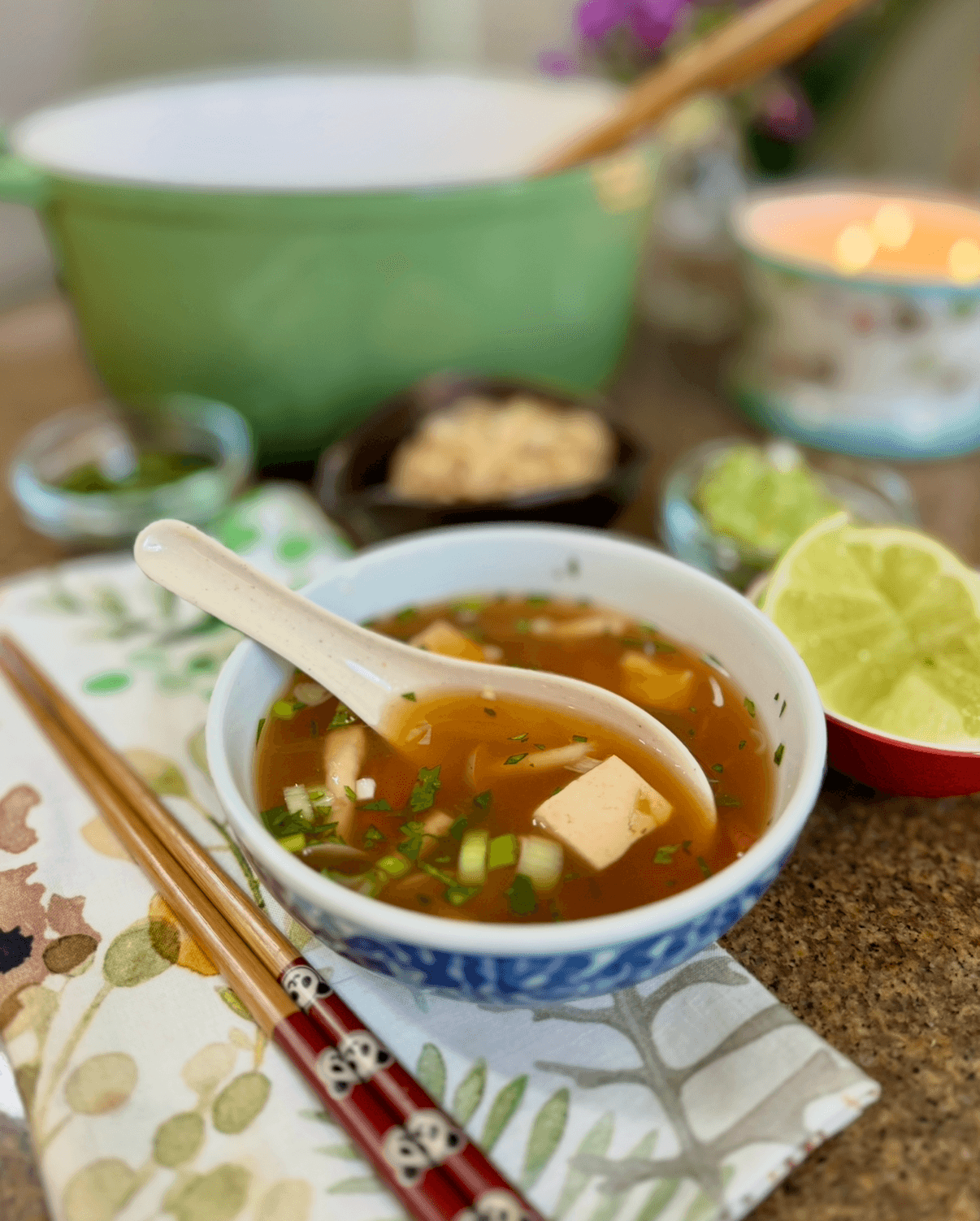
And timing decides whether a food reads as comfort or just reads as dinner. The same bowl of soup tastes different on a regular Tuesday than it does the week after a loss. Comfort food isn't a fixed list of dishes. It's a relationship between a dish and a moment.
Why Most Advice on Comfort Food Backfires
The instinct in most diet culture is to treat comfort food as the obstacle. Cut it, swap it, feel guilty about it, save it for a "cheat day" like it's something you have to earn back. That approach treats the craving as the enemy instead of treating it as information.
Here's what actually happens when comfort food gets removed instead of rebuilt: the craving doesn't go away, it just goes underground, and it usually comes back stronger and later, often at the exact moment you have the least bandwidth to manage it well. Restriction doesn't resolve the want, it just delays it and adds shame on top.
The Flip Approach: Keep the Comfort, Change the Structure
The Protein Flip™ method takes the opposite position: comfort food stays on the table, the structure underneath it is what changes.
Same braise, same casserole, same bowl of pasta, but the protein gets right-sized instead of dominating the plate, the plants and fiber do real work instead of sitting there as decoration, and a layer of flavor, a sauce that sings, herbs, acid, carries the dish so nothing feels like it's missing. The dish that comforted you still comforts you. It just leaves you fuller, longer, built on something that holds up the next day too.
That's the actual definition of a method, not a diet. A diet asks you to give up the thing that's working for you emotionally. A method asks what's underneath the thing, and rebuilds that instead.
Flip the plate. Flip the approach. Keep the food.
More of this thinking, recipe by recipe, lives in The Protein Flip™ Method and Cookbook, Deluxe Edition, available now on Amazon and through the website.
Balanced Protein. Better Living. Healthier Planet.
Keep reading