Salads
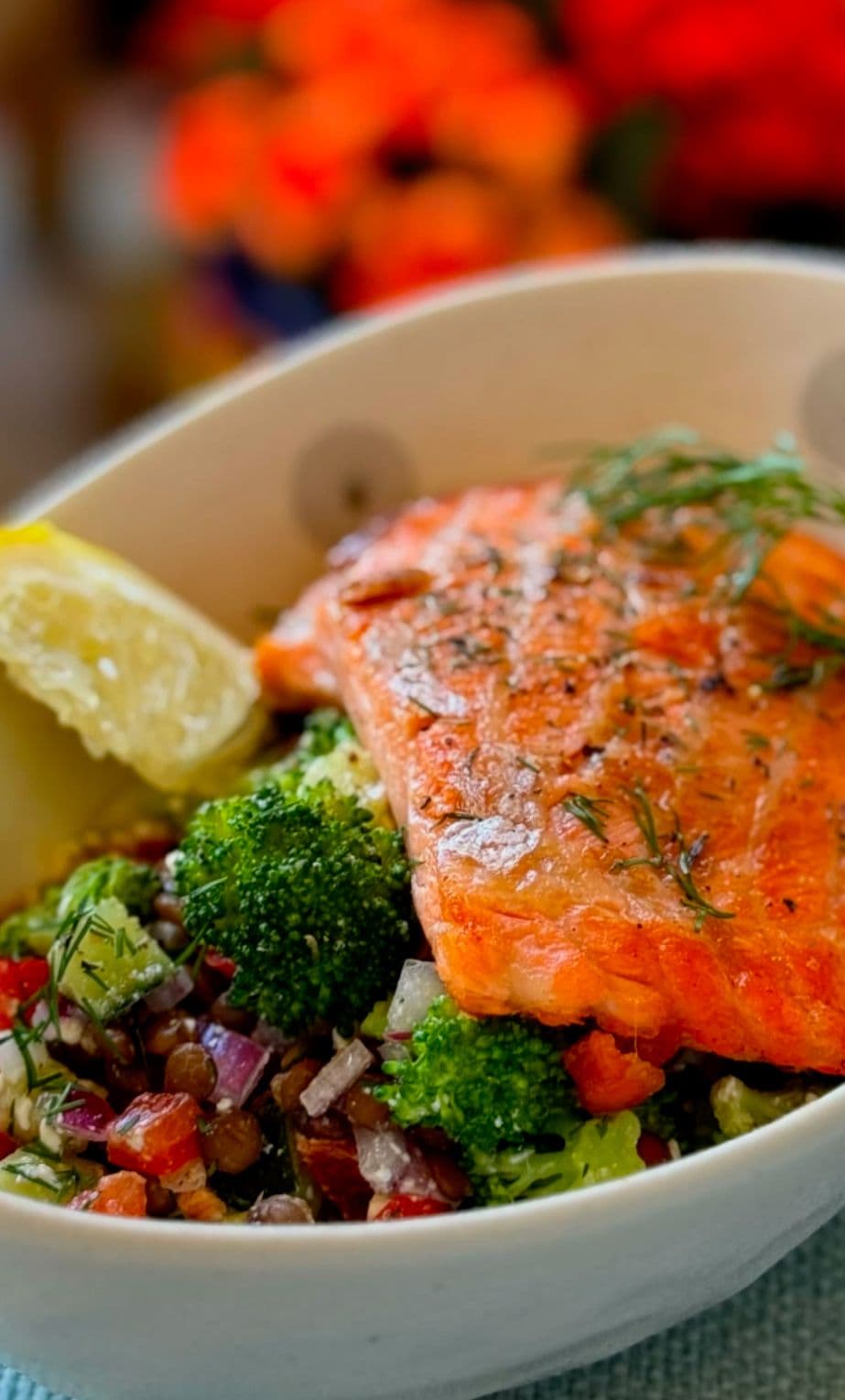
Mediterranean Salmon & Lentil Salad Recipe
Enjoy a delicious and refreshing Salmon with Lentil and Feta Salad‚Äîa perfect light meal that‚‘s packed with protein, fresh vegetables, and Mediterranean flavors! Topped with a lemon-Dijon vinaigrette and served with tender salmon, this recipe by Chef Healthy Henry is healthy, simple, and full of f
Ingredients
- Salad:
- 1 cup uncooked brown lentils (yields ~2 cups cooked)
- 1 cup lightly steamed broccoli florets
- 1 cup red bell pepper, diced
- 1 cup seedless cucumber, diced
- ½ cup finely chopped red onion
- ½ cup crumbled feta cheese
- Salmon:
- 1 lb salmon fillet, rinsed and patted dry (yields 4 servings at 4 oz each)
- 1 tbsp olive oil
- Salt and freshly ground black pepper
- Lemon-Dill Vinaigrette:
- ¼ cup lemon juice
- ⅓ cup chopped fresh dill
- 2 tsp Dijon mustard
- ¼ tsp kosher salt
- Freshly ground black pepper, to taste
- ¼ cup olive oil
Directions
- 1
Cook the Lentils In a medium saucepan, simmer lentils in water (or vegetable broth) for 18–20 minutes, or until tender but not mushy. Drain and let cool.
- 2
Make the Vinaigrette In a large bowl, whisk together lemon juice, dill, mustard, salt, and pepper. Slowly whisk in the olive oil to emulsify.
- 3
Toss the Salad Add the cooled lentils, broccoli, bell pepper, cucumber, red onion, and feta to the bowl with the vinaigrette. Toss well to combine and coat.
- 4
Cook the Salmon Heat 1 tbsp olive oil in a nonstick or cast iron skillet over medium-high heat. Season salmon with salt and pepper. Sear skin-side down (if using skin-on) for 4 minutes. Flip and cook for another 3–4 minutes, or until cooked through. Let rest, then portion into 4 servings (4 oz each).
- 5
Assemble & Serve Spoon the lentil salad onto bowls or plates. Top with salmon. Garnish with extra dill and lemon wedges, if desired.
- 6
Protein Flip™ Note: This recipe flips the protein script by pairing a modest 4 oz serving of salmon with a hearty portion of lentils and fiber-rich vegetables. It delivers 35–36g of protein, 9–10g of fiber, and a 1:3 plant-to-animal protein ratio — ideal for digestive comfort, satiety, and sustainability.